
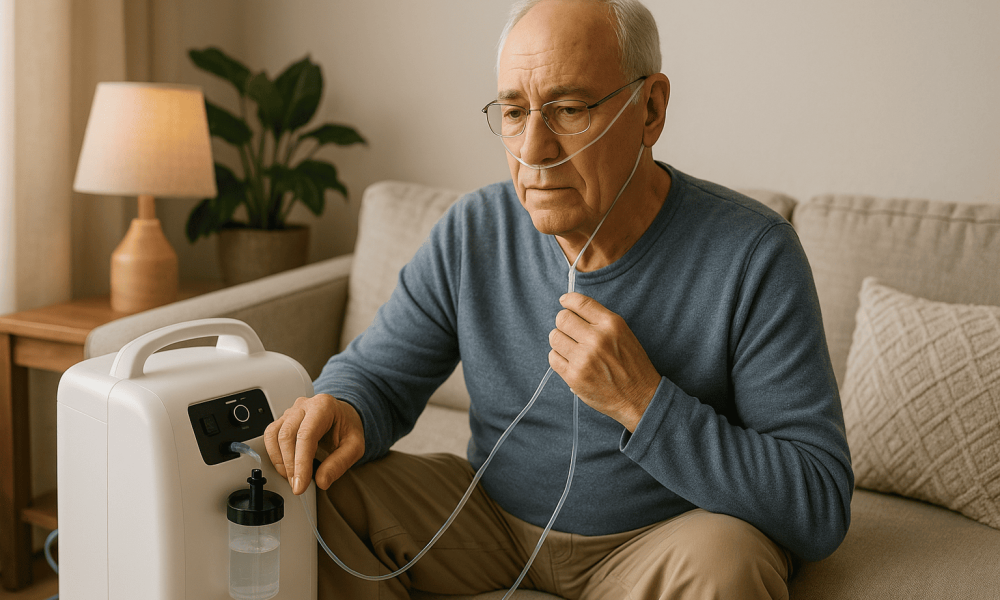
Home oxygen therapy provides extra oxygen for people whose blood oxygen level is too low because of a lung, heart, or other medical condition. The equipment may be used continuously, during activity, while sleeping, or only for a limited period, depending on the prescription.
Quick answer: use home oxygen only at the flow rate and schedule prescribed by your healthcare provider. Check the supply, keep tubing open and secure, follow the equipment company’s cleaning instructions, keep oxygen away from smoking, flames, heat, oils, and aerosols, and maintain a backup plan for power failures or equipment problems.
This guide explains how to manage oxygen therapy at home, compare common oxygen delivery systems, reduce fire and trip hazards, use a pulse oximeter more thoughtfully, prepare for travel, and recognize symptoms that need medical attention. For a broader overview of lung and airway care, visit our Respiratory Health guide.
Important safety note: supplemental oxygen is a prescription treatment. Do not start, stop, or change your oxygen flow rate based only on symptoms or a home pulse oximeter reading. Contact your healthcare provider if your oxygen needs appear to change.
What is home oxygen therapy?
Oxygen therapy delivers supplemental oxygen through a nasal cannula, mask, or another prescribed interface. It may be recommended when tests show that the body is not receiving enough oxygen. Conditions that can lead to a home oxygen prescription include chronic obstructive pulmonary disease (COPD), pulmonary fibrosis, respiratory failure, some heart conditions, and certain short-term illnesses or recovery periods.
Home oxygen does not treat every cause of breathlessness, and feeling short of breath does not automatically mean that more oxygen is needed. A healthcare team determines whether oxygen is appropriate through clinical assessment and oxygen measurements at rest, during activity, or while sleeping.
People with COPD can learn more about the condition and its treatment options in our guide to COPD basics.
Understand your oxygen prescription
Before using oxygen at home, make sure you understand the written prescription and the instructions from the medical equipment supplier. The plan may specify:
- Flow rate: the prescribed liters per minute or device setting.
- When to use oxygen: continuously, during activity, during sleep, or as otherwise directed.
- Delivery method: nasal cannula, mask, or another interface.
- Target oxygen range: an individualized range provided by the healthcare team, if home monitoring is recommended.
- Backup supply: what to use if a concentrator loses power or the primary device fails.
Never turn the flow higher or lower without medical guidance. More oxygen is not automatically better, and changing the setting can be unsafe for some people.
Types of home oxygen equipment
The best oxygen system depends on the prescription, mobility needs, home setup, power reliability, and insurance or supplier coverage. Some people use one system at home and another while outside.
| Equipment type | How it works | Practical considerations |
|---|---|---|
| Home oxygen concentrator | Pulls in room air, removes much of the nitrogen, and delivers concentrated oxygen. | Usually requires electricity and good airflow around the unit. A backup oxygen source is important for outages. |
| Portable oxygen concentrator (POC) | Uses ambient air and runs from a battery or electrical power. | Many models provide pulse-dose oxygen rather than continuous flow, so the device must match the prescription. |
| Compressed oxygen cylinder | Stores oxygen under pressure in a metal tank. | Tanks must remain secured and upright. Check the gauge and arrange refills before the supply becomes low. |
| Liquid oxygen system | Stores oxygen in liquid form and converts it to gas for use. | Equipment must be kept upright and handled according to supplier instructions. |
Ask the supplier to demonstrate every control, alarm, battery, connection, and backup step. Keep the supplier’s emergency number where the patient and caregivers can find it quickly.
How to use oxygen at home: a daily checklist
1. Check the supply and power
Confirm that the concentrator is connected to a safe power outlet or that the tank contains enough oxygen. If you use a portable system, check the battery level before leaving home. Refill or reorder supplies before they become critically low.
2. Inspect tubing and connections
Attach the tubing exactly as demonstrated. Make sure it is not kinked, blocked, cracked, or disconnected. Route long tubing away from walkways, doorways, heaters, and furniture that may pinch it.
3. Use the prescribed flow setting
Set the device to the exact rate or setting ordered by the healthcare provider. Do not adjust oxygen to compensate for anxiety, fatigue, or worsening breathlessness without speaking with the care team.
4. Position the cannula or mask correctly
Place the nasal cannula with the prongs positioned as instructed and secure the tubing comfortably behind the ears. If the tubing causes soreness, ask the supplier about cushions, softer tubing, or a different interface.
5. Keep equipment clean
Follow the supplier and manufacturer instructions for cleaning filters, humidifier bottles, cannulas, masks, and tubing. Do not create your own cleaning schedule if it conflicts with the device instructions. Use only the recommended water in a humidifier bottle, and never add medication, fragrance, or other substances unless specifically prescribed.
Using a pulse oximeter with home oxygen
A pulse oximeter can estimate blood oxygen saturation, but it does not replace medical assessment. Readings may be affected by poor circulation, cold hands, movement, nail products, device quality, and other factors. The FDA also warns that pulse oximeters have limitations and may be less accurate in some circumstances, including differences associated with skin pigmentation.
- Use the device only as your healthcare provider recommends.
- Rest your hand and keep it warm and still while taking a reading.
- Record the number together with symptoms, activity, and oxygen setting.
- Do not rely on a single reading if it does not match how you feel.
- Contact a healthcare provider if readings are repeatedly outside your personal target or symptoms are worsening.
Do not change the oxygen flow solely because of a consumer pulse oximeter result.
Home oxygen safety rules
Oxygen does not burn by itself, but it makes other materials ignite and burn more rapidly. Fire prevention is therefore the most important part of home oxygen safety.
- No smoking: do not smoke, vape, or allow anyone else to smoke near oxygen equipment.
- Keep away from flames and heat: maintain at least 6 feet (about 2 meters) from candles, fireplaces, gas stoves, space heaters, and other ignition sources, unless the supplier gives a stricter rule.
- Avoid sparks and hot appliances: do not use hair dryers, electric razors, heating pads, or similar appliances while wearing oxygen.
- Avoid oils and flammable products: do not use petroleum jelly, oil-based creams, grease, aerosol sprays, or flammable solvents near oxygen. Use a water-based lubricant if recommended for dryness.
- Secure cylinders: store oxygen tanks upright in a stable holder so they cannot fall or roll.
- Keep equipment ventilated: do not cover a concentrator or place it tightly against curtains, walls, or furniture.
- Prevent trips: arrange tubing along walls or other low-risk routes, but do not cut, alter, or extend it beyond supplier guidance.
- Install safety equipment: maintain working smoke alarms and a suitable fire extinguisher.
Post visible “No Smoking” and “Oxygen in Use” signs where appropriate, and tell regular visitors about the safety rules before they enter.
Prepare for power failures and equipment problems
People who depend on continuous oxygen need a written backup plan. Discuss the plan with the oxygen supplier and healthcare team before an emergency happens.
- Keep the prescribed backup oxygen source ready and accessible.
- Know how long the backup supply is expected to last at the prescribed flow.
- Keep supplier, healthcare provider, emergency service, and utility phone numbers nearby.
- Tell the electric utility and local fire department that oxygen-dependent medical equipment is used in the home.
- Charge portable batteries and store approved spare batteries safely.
- Know where to go if an outage is prolonged and the backup supply may run out.
If equipment stops working, first check the power, connections, tubing, alarms, and supply. Switch to the prescribed backup system if necessary and call the supplier. Seek emergency help if breathing is severe or the backup oxygen is unavailable.
Comfort and common side effects
Home oxygen is generally safe when used correctly, but some people experience dryness, nose irritation, nosebleeds, headaches, or discomfort from the cannula.
- Ask whether humidification is appropriate for your prescribed flow and device.
- Use aloe vera or a water-based lubricant for dry lips or nostrils if approved by the care team.
- Do not use petroleum jelly or other oil-based products around oxygen.
- Ask the supplier about ear cushions or another cannula style if tubing causes pressure or skin damage.
- Report frequent morning headaches, unusual tiredness, agitation, drowsiness, or confusion.
Activity can still be important while using supplemental oxygen. A structured program may help people move more safely and manage breathlessness. See our guide to pulmonary rehab exercises.
Leaving home and traveling with oxygen
Plan trips before leaving home. Confirm that the portable device can provide the prescribed oxygen during walking, driving, appointments, and delays. Carry supplier contact details and enough battery or oxygen supply for the entire outing, plus a reasonable reserve.
Air travel with a portable oxygen concentrator
Airlines may allow approved portable oxygen concentrators, but rules vary. Contact the airline well in advance, confirm that the device meets its requirements, and ask what medical documentation is needed. The FAA advises travelers who depend on a POC to carry sufficient spare batteries for the flight and to protect spare batteries from damage and short circuit.
Compressed oxygen cylinders generally cannot be carried in passenger baggage in the United States. Never assume that an airline will provide oxygen; confirm arrangements directly before travel.
When to call a healthcare provider
Check the equipment first if symptoms suddenly worsen: confirm that oxygen is flowing, the tubing is connected, and the prescribed setting has not changed. Contact a healthcare provider promptly if:
- breathlessness is worsening despite working equipment;
- oxygen readings are repeatedly outside the individualized target;
- you develop frequent headaches, unusual drowsiness, agitation, or confusion;
- the nose is frequently bleeding or severely irritated;
- you need oxygen more often than the prescription allows;
- the equipment is repeatedly alarming or failing.
Seek emergency care for severe difficulty breathing, blue or gray lips or fingernails, chest pain, fainting, new confusion, inability to stay awake, or loss of oxygen supply when continuous oxygen is medically necessary.
If cough or breathing symptoms are persistent or worsening, review our guide on when to seek medical attention for chronic cough. For people with chronic mucus-producing cough, see symptoms and causes of chronic bronchitis.
Questions to ask about home oxygen therapy
- What flow rate and schedule should I use at rest, during sleep, and during activity?
- What oxygen range should I monitor, and when should I call?
- Does my portable device provide continuous flow or pulse-dose oxygen?
- What is my backup plan during a power outage?
- How should I clean and replace the tubing, cannula, filters, and humidifier bottle?
- Can I exercise, shower, drive, or travel with my specific equipment?
- What symptoms could mean that the oxygen prescription needs reassessment?
Frequently asked questions
Can I increase my oxygen if I feel short of breath?
No. Use the prescribed setting and contact a healthcare provider if breathlessness is worse than usual. Shortness of breath can have causes that are not corrected by increasing oxygen, and an unapproved flow change may be unsafe.
Should I use oxygen whenever my pulse oximeter number looks low?
Follow the written oxygen plan rather than reacting to one consumer-device reading. Recheck the measurement under good conditions, pay attention to symptoms, and contact the care team when readings are repeatedly outside your personal target.
Can I use petroleum jelly for a dry nose?
No. Oil-based products can create a fire hazard around oxygen. Ask about a water-based lubricant or other approved treatment for dryness.
Can a portable oxygen concentrator be used on an airplane?
Many airlines allow portable concentrators that meet applicable requirements, but approval and documentation rules vary. Contact the airline before travel and carry enough protected spare batteries for the planned journey and possible delays.
How often should oxygen equipment be cleaned or replaced?
Follow the instructions from the equipment supplier and manufacturer because schedules vary by device and accessory. Replace contaminated or damaged parts promptly and ask the supplier when the instructions are unclear.
Is home oxygen therapy the same as hyperbaric oxygen therapy?
No. Home oxygen therapy delivers supplemental oxygen through a prescribed device at normal atmospheric pressure. Hyperbaric oxygen therapy is a separate medical treatment delivered in a pressurized chamber.
References
- American Lung Association: Using Oxygen at Home
- American Lung Association: Using Oxygen Safely
- American Lung Association: Oxygen Delivery Devices and Accessories
- MedlinePlus: Using Oxygen at Home
- MedlinePlus: Oxygen Safety
- NHLBI: COPD Treatment and Oxygen Therapy
- FDA: Pulse Oximeters
- FAA: Portable Oxygen Concentrators
Conclusion
Home oxygen therapy can support daily function and help correct low blood oxygen when it is prescribed for the right medical reason. The most important steps are to follow the prescribed flow and schedule, keep equipment maintained, prevent fire and trip hazards, monitor symptoms rather than relying on one number, and prepare for outages and travel. Any apparent change in oxygen needs should be reviewed by a healthcare professional rather than managed by changing the flow independently.