
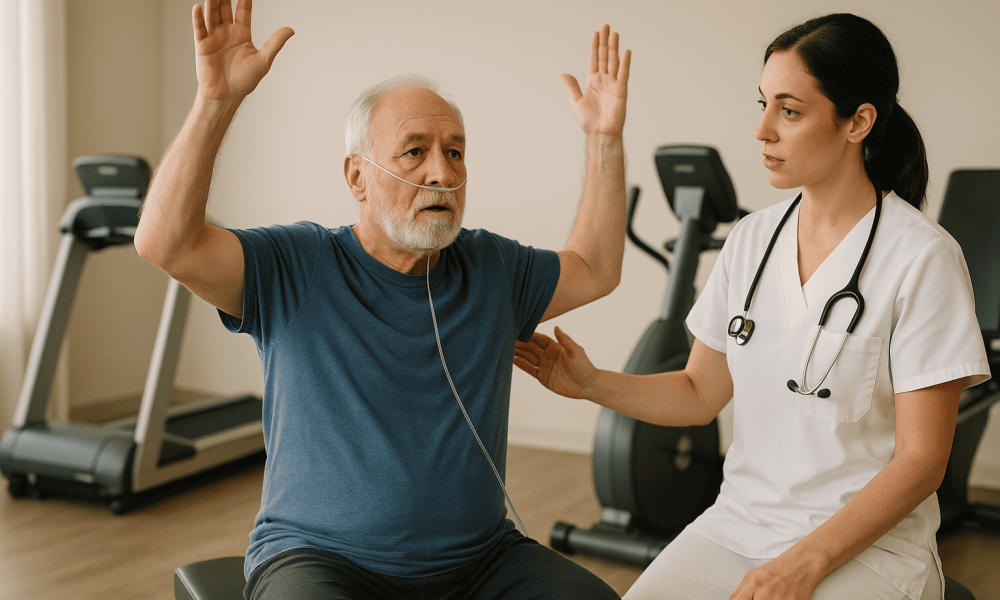
Pulmonary rehab exercises are designed to help people with chronic breathing problems move more safely, manage shortness of breath, build endurance, and use breathing techniques during daily activity. These exercises are often part of a structured pulmonary rehabilitation program, especially for people with COPD, pulmonary fibrosis, cystic fibrosis, or other long-term lung conditions.
Quick answer: pulmonary rehab may include breathing techniques such as pursed-lip breathing, supervised walking or cycling, light strength training, stretching, pacing strategies, and education about symptoms, medications, oxygen use, and flare-up planning. The safest plan depends on your diagnosis, oxygen needs, fitness level, and medical history.
This guide explains common pulmonary rehab exercises to improve breathing, how they may support lung health, and when to ask a healthcare provider before starting. For the broader topic of lung and airway wellness, see our Respiratory Health guide.
What is pulmonary rehabilitation?
Pulmonary rehabilitation is a structured program that combines exercise training, breathing techniques, education, and support for people with chronic lung disease or ongoing breathing limitations. The goal is not to “cure” a lung condition, but to help a person breathe more efficiently, move with less shortness of breath, understand symptoms, and improve daily quality of life.
A pulmonary rehab plan may include supervised exercise, breathing retraining, education about medicines and inhalers, oxygen guidance, nutrition support, energy-conservation strategies, and planning for symptom flare-ups. Some people attend a hospital or outpatient program, while others may be given a home plan after medical evaluation.
Main goals of pulmonary rehab
The main goals of pulmonary rehab are practical: helping people function better with a breathing condition, reduce activity-related breathlessness, and feel more confident during everyday tasks.
- Improve activity tolerance: Build endurance for walking, stairs, household tasks, and light exercise.
- Use breathing techniques more effectively: Learn strategies such as pursed-lip breathing and paced breathing during movement.
- Manage shortness of breath: Recognize triggers and use pacing, posture, and recovery techniques.
- Support safer exercise: Adapt movement to symptoms, oxygen needs, and medical history.
- Improve confidence and quality of life: Reduce fear of movement and support daily independence.
If a cough or breathing symptom is persistent, worsening, or linked with warning signs, read our guide on when to seek medical attention for chronic cough.
Key Components of Pulmonary Rehabilitation
Pulmonary rehab isn’t just about exercising; it encompasses various elements that work together to support respiratory health. Here are the key components:
Exercise Training
Exercise is at the heart of pulmonary rehab. Tailored exercise programs help strengthen the muscles involved in breathing, improve cardiovascular health, and increase overall endurance. The exercises are designed to be safe and effective, taking into account the individual’s current health status and capabilities.
Education
Understanding your condition is crucial for effective management. Educational sessions cover topics such as:
- Breathing Techniques: Learn methods to breathe more efficiently.
- Medication Management: Understand how to use medications correctly.
- Energy Conservation: Strategies to manage fatigue and conserve energy.
- Nutrition: Guidance on maintaining a healthy diet to support lung health.
Knowledge empowers you to take control of your health and make informed decisions about your care.
Support Services
Living with a chronic respiratory condition can be emotionally challenging. Support services, including counseling and support groups, provide a space to share experiences, cope with anxiety, and receive encouragement from others facing similar challenges.
Safety note before starting pulmonary rehab exercises
Pulmonary rehab exercises should be matched to a person’s diagnosis, symptoms, oxygen level, medications, and overall fitness. People with COPD, pulmonary fibrosis, heart disease, recent hospitalization, oxygen therapy, chest pain, dizziness, or severe shortness of breath should ask a healthcare provider which exercises are appropriate before starting or changing an exercise plan.
Stop exercising and seek medical advice if you develop chest pain, severe breathlessness, faintness, bluish lips or fingers, confusion, coughing up blood, or symptoms that feel sudden or dangerous.
Effective Exercises in Pulmonary Rehabilitation
Exercise plays a pivotal role in pulmonary rehab, helping to enhance lung capacity, strengthen respiratory muscles, and improve overall physical fitness. Let’s explore some of the most effective exercises used in pulmonary rehabilitation programs.
Breathing exercises
Breathing exercises are often used in pulmonary rehab to help people control breathlessness during activity and recover more comfortably after exertion. They should feel controlled and gentle, not forced.
Pursed-lip breathing
Pursed-lip breathing can help slow breathing and make exhalation more controlled during activity or shortness of breath.
- Relax your neck and shoulders.
- Breathe in slowly through your nose for about two counts.
- Purse your lips as if you are gently blowing through a straw.
- Breathe out slowly through pursed lips for about four counts.
- Repeat for several breaths, especially during walking, climbing stairs, or recovery after activity.
Diaphragmatic breathing
Diaphragmatic breathing focuses on using the diaphragm more consciously instead of relying mainly on shallow upper-chest breathing.
- Sit comfortably or lie down with your knees supported.
- Place one hand on your chest and one hand on your abdomen.
- Breathe in slowly through your nose and allow your abdomen to rise.
- Exhale slowly through pursed lips and let your abdomen fall.
- Practice for short sessions and stop if you feel dizzy or uncomfortable.
Paced breathing during activity
Paced breathing means coordinating your breath with movement. For example, you may inhale before a movement and exhale during the harder part, such as standing from a chair or climbing a step.
Physical Exercises
In addition to breathing exercises, physical activities aimed at enhancing cardiovascular and muscular strength are integral to pulmonary rehab.
Aerobic Exercise
Aerobic exercises increase heart rate and improve the efficiency of the cardiovascular system. Activities can include walking, cycling, swimming, or using a stationary bike.
Sample Aerobic Exercise Routine:
- Start with a 5-minute warm-up at a slow pace.
- Engage in 20-30 minutes of moderate-intensity exercise.
- End with a 5-minute cool-down at a slower pace.
- Perform this routine three to five times a week.
Consistency is key to building endurance and improving overall fitness.
Strength Training
Strength training exercises help build muscle mass, including the muscles involved in breathing. This can make breathing less strenuous and improve physical performance.
Sample Strength Training Routine:
- Use light weights or resistance bands.
- Perform exercises targeting major muscle groups, such as:
- Arm curls
- Leg presses
- Chest presses
- Shoulder raises
- Do 2-3 sets of 10-15 repetitions for each exercise.
- Include strength training sessions two to three times a week.
Gradually increase the resistance as your strength improves.
Flexibility Exercises
Flexibility exercises enhance the range of motion in your joints, reduce muscle stiffness, and improve overall mobility.
Sample Flexibility Exercise Routine:
- Stretch major muscle groups, including arms, legs, back, and neck.
- Hold each stretch for 15-30 seconds without bouncing.
- Perform stretches daily or at least three times a week.
- Incorporate activities like yoga or tai chi for added flexibility and relaxation.
Regular stretching can prevent injuries and improve physical comfort.
Balance and Coordination Exercises
Maintaining good balance and coordination is essential, especially as you age or if you have other health conditions that affect mobility.
Sample Balance Exercises:
- Standing on One Foot: Hold onto a sturdy surface, lift one foot, and balance for 10-15 seconds. Switch feet and repeat.
- Heel-to-Toe Walk: Walk in a straight line, placing the heel of one foot directly in front of the toes of the other foot.
- Side Leg Raises: Stand beside a chair, lift one leg to the side, hold for a few seconds, and lower it back down. Switch legs.
These exercises can help prevent falls and improve overall stability.
Tips for Effective Pulmonary Rehabilitation
Maximizing the benefits of pulmonary rehab involves more than just following an exercise routine. Here are some tips to ensure your rehabilitation journey is effective and sustainable:
Consistency is Key
Regular participation in rehab sessions and adherence to prescribed exercises are crucial for seeing improvements. Make exercise a part of your daily routine to build endurance and strength over time.
Listen to Your Body
While pushing yourself is important, it’s equally vital to recognize your limits. Pay attention to signs of overexertion, such as excessive shortness of breath, dizziness, or chest pain, and adjust your activities accordingly.
Set Realistic Goals
Setting achievable goals can keep you motivated and provide a sense of accomplishment. Whether it’s increasing your walking distance, lifting slightly heavier weights, or improving your breathing techniques, small milestones can lead to significant progress.
Stay Hydrated
Proper hydration supports overall health and helps keep mucus in your lungs thin and easier to expel. Aim to drink plenty of fluids throughout the day, especially before and after exercise.
Maintain a Healthy Diet
A balanced diet rich in fruits, vegetables, lean proteins, and whole grains can provide the necessary nutrients to support your respiratory health and overall well-being.
Manage Stress
Chronic respiratory conditions can be stressful. Incorporating relaxation techniques such as meditation, deep breathing exercises, or engaging in hobbies can help manage stress levels and improve mental health.
Seek Support
Connecting with others who are going through similar experiences can provide emotional support and practical advice. Support groups, whether in-person or online, can be invaluable resources during your rehabilitation journey.
How to Start Pulmonary Rehabilitation
Embarking on a pulmonary rehab program is a proactive step towards better respiratory health. Here’s how to get started:
Consult Your Healthcare Provider
Begin by discussing pulmonary rehabilitation with your doctor. They can assess your condition, determine if rehab is appropriate for you, and refer you to a certified pulmonary rehab program.
Find a Pulmonary Rehab Program
Pulmonary rehab programs are typically offered in hospitals, outpatient clinics, and specialized rehab centers. Look for programs that are accredited and staffed by a multidisciplinary team, including respiratory therapists, physical therapists, and healthcare professionals.
Prepare for Your First Session
Before your initial rehab session, gather any necessary medical information, such as your medical history, current medications, and recent test results. Wear comfortable clothing and bring any equipment you might need, like inhalers or oxygen tanks.
Commit to the Program
Successful rehabilitation requires commitment and active participation. Attend all scheduled sessions, follow the prescribed exercise routines, and engage with the educational components of the program.
For a broader overview of lung health, airway symptoms, and prevention, read our Respiratory Health guide. If you are unsure whether a cough or breathing symptom needs medical care, see our guide on when to seek medical attention for chronic cough.
References
- NHLBI: Pulmonary Rehabilitation
- MedlinePlus: Pulmonary Rehabilitation
- American Lung Association: Pulmonary Rehabilitation
- American Lung Association: Breathing Exercises
- American Thoracic Society: Pulmonary Rehabilitation
Conclusion: Breathe Easier with Pulmonary Rehabilitation
Pulmonary rehabilitation offers a structured and supportive environment to improve your breathing, enhance lung function, and elevate your overall quality of life. Through a combination of targeted exercises, education, and support, you can manage respiratory conditions more effectively and regain control over your health.
Remember, every journey begins with a single step. By embracing pulmonary rehab, you’re taking a proactive approach to better health and well-being. So, breathe easy and take charge of your respiratory health today!