
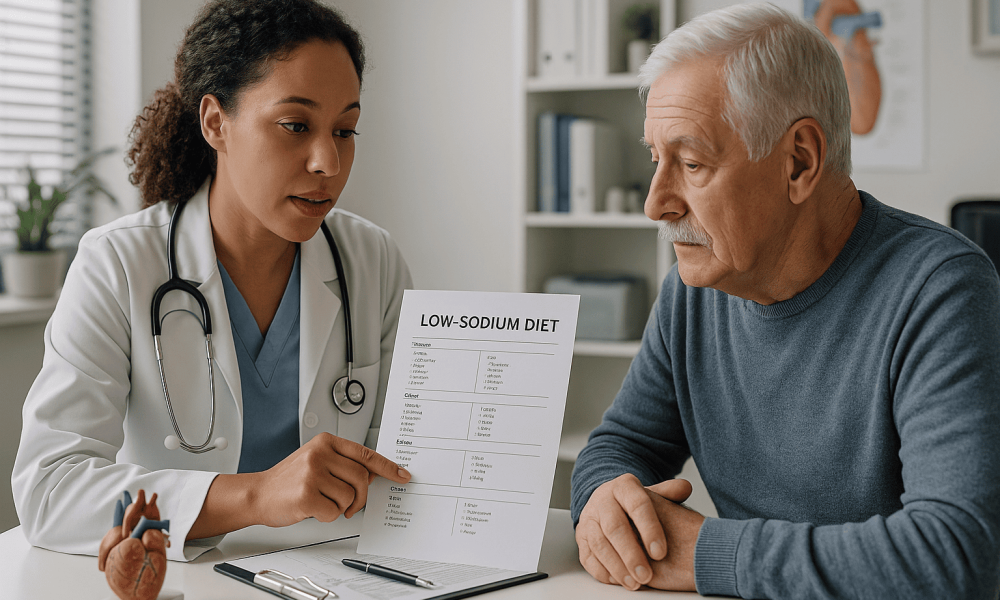
A low-sodium diet can help many people with congestive heart failure (CHF) manage fluid retention, swelling, shortness of breath, and sudden weight changes. The goal is not to remove every trace of sodium, but to follow a realistic sodium target from your healthcare provider and choose foods that support heart failure treatment.
Quick answer: many CHF diet plans focus on limiting sodium, reading nutrition labels, choosing mostly fresh or minimally processed foods, avoiding high-sodium packaged meals, and tracking symptoms such as swelling, breathing changes, and rapid weight gain. Some people with moderate to severe heart failure may be advised to follow a target around 2,000 mg of sodium per day, but your personal limit should come from your healthcare team.
This guide explains low-sodium diet plans for CHF patients, including food choices, meal examples, label-reading tips, restaurant strategies, and warning signs to discuss with a healthcare professional. For the broader topic of heart and vascular wellness, see our Cardiovascular Health guide.
Why sodium matters in congestive heart failure
Sodium affects how the body balances fluid. In heart failure, the heart does not pump as effectively as it should, and extra fluid can build up in the legs, abdomen, lungs, or other tissues. Eating too much sodium may make fluid retention worse for some people, which can contribute to swelling, shortness of breath, and weight gain from fluid.
Lowering sodium can support the rest of a heart failure care plan, but it should not replace prescribed medicines, follow-up visits, daily weight tracking, or other recommendations. If you take diuretics, blood pressure medicines, kidney-related medicines, or heart failure medicines, ask your healthcare provider how sodium and fluid goals fit into your treatment plan.
How much sodium should CHF patients eat?
There is no single sodium target that fits every person with CHF. Some people are told to aim for about 2,000 mg per day, while others may receive a different target based on symptoms, kidney function, blood pressure, medications, lab results, and severity of heart failure.
The American Heart Association recommends no more than 2,300 mg of sodium per day for most adults and an ideal limit of 1,500 mg per day for many adults, especially people with high blood pressure. However, people with heart failure should follow the target set by their own clinician, because overly strict sodium restriction may not be appropriate for everyone.
| Sodium target | What it may mean | Important note |
|---|---|---|
| 2,300 mg per day | A common upper limit recommended for many adults. | May still be too high for some people with symptomatic heart failure. |
| Around 2,000 mg per day | A common heart failure sodium goal used in many care plans. | Ask your healthcare provider whether this applies to you. |
| 1,500 mg per day | A stricter sodium goal sometimes used for blood pressure or heart-risk reduction. | Do not choose a very low target without medical guidance. |
Safety note before changing your diet
A low-sodium diet should be personalized. Do not stop or adjust heart failure medications, diuretics, potassium supplements, blood pressure medicines, or fluid restrictions on your own. Sodium, fluids, kidney function, potassium, and medications can interact in important ways.
Contact your healthcare provider if you notice rapid weight gain, increasing swelling, worsening shortness of breath, dizziness, confusion, fainting, chest pain, or symptoms that feel sudden or severe. If symptoms feel urgent or life-threatening, seek emergency care.
Foods to choose more often on a low-sodium CHF diet
The easiest low-sodium diet plans for CHF patients usually start with simple, minimally processed foods. These foods are not automatically sodium-free, but they are often easier to fit into a daily sodium budget than packaged, restaurant, cured, or canned foods.
- Fresh fruits and vegetables: apples, berries, oranges, bananas, leafy greens, carrots, cucumbers, peppers, tomatoes, zucchini, and broccoli.
- Unsalted or low-sodium vegetables: fresh, frozen without sauce, or canned vegetables labeled “no salt added.”
- Whole grains: oats, brown rice, quinoa, barley, whole-wheat pasta, and low-sodium whole-grain bread when available.
- Lean proteins: fresh poultry, fish, eggs, beans, lentils, tofu, and unsalted nuts or seeds.
- Heart-healthy fats: olive oil, avocado, unsalted nuts, and seeds in reasonable portions.
- Flavor builders without salt: lemon, vinegar, garlic, onion, herbs, salt-free seasoning blends, paprika, cumin, pepper, basil, oregano, and rosemary.
Foods to limit or check carefully
Most sodium in many diets comes from packaged and restaurant foods, not only from the salt shaker. That means a food can be high in sodium even when it does not taste especially salty.
| Higher-sodium choice | Lower-sodium swap |
|---|---|
| Canned soup or instant noodles | Homemade soup with low-sodium broth or no-salt-added ingredients |
| Deli meats, bacon, sausage, ham | Fresh cooked chicken, turkey, fish, tofu, beans, or eggs |
| Frozen dinners and boxed meals | Batch-cooked meals with measured salt-free seasoning |
| Regular canned vegetables | No-salt-added canned vegetables or frozen vegetables without sauce |
| Pickles, olives, sauerkraut | Fresh vegetables, vinegar-based homemade slaw, or small controlled portions |
| Salty sauces, soy sauce, teriyaki sauce | Low-sodium versions, vinegar, citrus, herbs, garlic, or salt-free blends |
| Restaurant meals and fast food | Grilled or baked options, sauces on the side, smaller portions, and nutrition information checked in advance |
How to read labels for sodium
Label reading is one of the most practical skills for a CHF low-sodium meal plan. Start with the serving size, because the sodium number applies to one serving, not always the whole package.
- Check sodium per serving: compare similar products and choose the lower-sodium option.
- Watch the number of servings: a package with 600 mg per serving and two servings contains 1,200 mg if you eat the whole package.
- Look for helpful terms: “low sodium,” “very low sodium,” “no salt added,” “unsalted,” or “sodium-free.”
- Be careful with “reduced sodium”: it means less sodium than the original version, but it may still be high.
- Track hidden sodium: bread, cheese, sauces, condiments, salad dressings, canned foods, and prepared meats can add up quickly.
Sample low-sodium meal plan for CHF patients
This sample plan is for education only. Your actual sodium target, fluid plan, calories, protein needs, and potassium guidance may be different. Ask your healthcare provider or a registered dietitian for a plan that fits your heart failure stage, kidney function, medications, and lab results.
| Meal | Example | Low-sodium strategy |
|---|---|---|
| Breakfast | Oatmeal with berries, cinnamon, and unsalted nuts | Use plain oats instead of instant flavored packets. |
| Snack | Apple slices with unsalted peanut butter | Choose unsalted nut butter when possible. |
| Lunch | Grilled chicken or bean bowl with brown rice, vegetables, olive oil, lemon, and herbs | Avoid salty sauces and use fresh seasoning. |
| Snack | Carrot sticks, cucumber, or low-sodium yogurt if appropriate | Check labels because dairy products vary in sodium. |
| Dinner | Baked fish, roasted vegetables, and quinoa | Use garlic, lemon, herbs, and pepper instead of salt. |
7-day low-sodium planning framework
You do not need a complicated diet to reduce sodium. A repeatable weekly framework can make planning easier and help avoid high-sodium convenience meals.
- Day 1: oatmeal breakfast, chicken rice bowl, baked fish dinner.
- Day 2: eggs with vegetables, lentil salad, turkey or tofu lettuce wraps with low-sodium seasoning.
- Day 3: Greek yogurt or oatmeal, bean soup made with no-salt-added ingredients, grilled chicken with vegetables.
- Day 4: fruit and oats, tuna or chickpea salad with low-sodium ingredients, salmon with sweet potato.
- Day 5: smoothie with fruit and unsalted nut butter, quinoa bowl, homemade turkey or bean chili with no-salt-added tomatoes.
- Day 6: whole-grain toast with egg if it fits your sodium plan, leftovers from a low-sodium meal, baked poultry with vegetables.
- Day 7: simple breakfast, large salad with fresh protein, low-sodium pasta dish with vegetables and herbs.
The key is not perfection. The key is consistency: planning meals, checking labels, avoiding surprise sodium, and knowing your personal daily limit.
Eating out with CHF: practical sodium tips
Restaurant meals can contain a large amount of sodium. If you eat out, check nutrition information when available and decide before ordering what fits your plan.
- Ask for sauces, dressings, and gravies on the side.
- Choose grilled, baked, or steamed options instead of fried or breaded foods.
- Ask whether food can be prepared without added salt.
- Limit soups, cured meats, salty appetizers, and heavily sauced dishes.
- Consider taking half the meal home to reduce sodium in one sitting.
- Avoid “saving up” sodium for a restaurant meal unless your clinician has said that approach is safe for you.
What to track with a low-sodium CHF diet
A low-sodium diet is most useful when it is connected to symptom tracking and medical follow-up. Many people with heart failure are asked to monitor weight and symptoms because fluid changes may show up quickly.
- Daily weight: weigh at the same time each day if your care team recommends it.
- Swelling: watch for changes in ankles, feet, legs, abdomen, or hands.
- Breathing: track shortness of breath, coughing at night, or needing more pillows to sleep.
- Energy and activity: note whether normal tasks are becoming harder.
- Blood pressure and heart rate: track if your provider asks you to.
- Sodium intake: use labels, a notebook, or an app to see where sodium is coming from.
If heart failure symptoms are changing, read our guide to early warning signs of heart failure. For medication-related questions, see our guide to medications for managing congestive heart failure.
How a low-sodium diet fits with the rest of CHF care
Diet is only one part of heart failure management. Many people also need medications, activity planning, symptom monitoring, weight management, cardiac rehabilitation, and follow-up care.
If you are recovering after a heart event or trying to rebuild activity tolerance, read our guide on phases of cardiac rehabilitation. A cardiac rehab program may help people build safer routines around exercise, nutrition, medications, and long-term lifestyle changes.
FAQ: Low-sodium diet plans for CHF patients
Is a low-sodium diet necessary for everyone with CHF?
Many people with CHF are advised to limit sodium, but the exact target should be individualized. Your healthcare provider may adjust recommendations based on symptoms, kidney function, medications, blood pressure, and fluid status.
How much sodium is allowed on a CHF diet?
Some heart failure plans use a target around 2,000 mg per day, while general heart-health guidance often recommends no more than 2,300 mg per day and an ideal goal of 1,500 mg for many adults. Your personal sodium limit should come from your healthcare team.
Can I use salt substitutes with heart failure?
Ask your healthcare provider before using salt substitutes. Many salt substitutes contain potassium, which may be unsafe for some people taking heart failure medicines or people with kidney problems.
Are canned foods always bad for CHF?
Not always. No-salt-added canned foods can fit into a low-sodium plan. Regular canned foods may be high in sodium, but rinsing some canned beans or vegetables can reduce some sodium. Always check the label.
What is the easiest first step to lower sodium?
Start by replacing one high-sodium packaged or restaurant meal with a simple home-prepared meal made from fresh or low-sodium ingredients. Then compare labels for foods you buy often, such as bread, soup, sauces, and frozen meals.
Should CHF patients restrict fluids too?
Some people with heart failure are told to limit fluids, but not everyone needs the same fluid target. Follow your healthcare provider’s instructions, especially if you take diuretics or have kidney-related concerns.
References
- NHLBI: Heart Failure Treatment
- MedlinePlus: Low-Salt Diet
- CDC: Tips for Reducing Sodium Intake
- American Heart Association: How Much Sodium Should I Eat Per Day?
- Heart Failure Society of America: How to Follow a Low-Sodium Diet
Conclusion: building a realistic low-sodium CHF plan
A low-sodium diet plan for CHF should be practical, consistent, and personalized. The most effective plan is usually one you can follow every day: check labels, choose mostly fresh or low-sodium foods, plan simple meals, limit restaurant sodium, and track symptoms that may suggest fluid buildup.
Work with your healthcare provider or a registered dietitian to set the right sodium target for your condition. If your symptoms, weight, swelling, breathing, or medications change, your diet plan may need to change too.