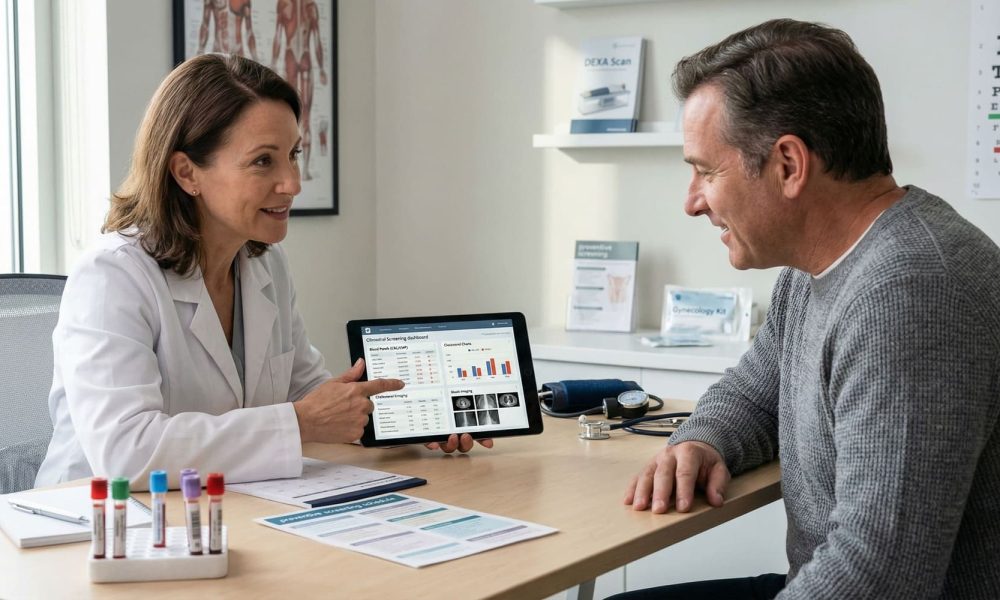
Preventive health screenings are the cornerstone of long-term wellness, designed to detect potential health issues before symptoms even appear. Utilizing tools from basic blood work to specialized imaging, screenings empower you to take proactive control of your health. Understanding your results is key, starting with interpreting your Common Blood Panels: CBC, CMP, and What They Reveal and decoding your LDL vs. HDL: Decoding Your Cholesterol Numbers.
This comprehensive guide details the purpose, procedure, and recommended frequency for the most critical health checks, from colonoscopies and mammograms to eye and bone density scans.
—
1. Routine Blood Tests: Understanding Your Biomarkers
Routine blood tests provide a snapshot of your body’s internal function, catching issues like nutrient deficiencies or systemic problems early. Our essential guide covers Common Blood Panels: CBC, CMP, and What They Reveal, giving you the tools to better understand your lab slip. We emphasize the importance of preparation, including clarifying Fasting vs. Non-Fasting: Does It Affect Your Results?
Interpreting Results and Frequency
We break down complex markers in How to Interpret Your CBC: Red, White Cells, and Platelets and explain how these tests are vital for Early Detection: Catching Diabetes and Cholesterol Issues. Specialized checks, such as Thyroid Function Checks: TSH, T3, T4 Explained, are also reviewed, alongside advice on Tips for Accurate Results: Preparing for a Blood Test.
- Routine vs. Specialized Tests: When Do You Need More?: Differentiating standard vs. advanced diagnostics.
- How Often Should You Get Routine Blood Work?: Recommended scheduling based on age and health profile.
—
2. Cholesterol and Lipid Profile Management
A balanced lipid profile is crucial for cardiovascular health. Our foundational article on LDL vs. HDL: Decoding Your Cholesterol Numbers explains the “good” and “bad” cholesterol types, while a separate guide addresses the significance of Triglycerides: Why They Matter for Heart Health. We provide practical advice on Improving Your Lipid Profile Through Diet and Exercise.
Treatment, Lifestyle, and Monitoring
Pharmacological options are discussed in Statins and Alternatives: Weighing Benefits and Risks. For those preferring natural routes, we offer comprehensive Lifestyle Hacks: Lowering Cholesterol Without Medication and specific advice on Foods That Help: Oats, Avocado, and Omega-3s. We also cover hereditary factors in Familial Hypercholesterolemia: Genetic Factors to Consider.
- When and How Often to Test Your Cholesterol Levels: Guidelines for routine screening.
—
3. Colonoscopy and Colorectal Cancer Prevention
Colonoscopy remains the gold standard for colorectal cancer prevention. Our step-by-step guide explains What to Expect During a Colonoscopy Procedure and details the critical role of preparation in Bowel Prep 101: Ensuring a Successful Screening. The procedure is vital for Understanding Polyps: Types, Risks, and Removal.
Procedure, Recovery, and Alternatives
We provide essential advice on Post-Procedure Care: Recovery and Possible Side Effects. Prevention starts with knowing Preventing Colon Cancer: When to Start Screenings and making the right Dietary Tips Before and After Colonoscopy. For certain patients, we compare Virtual Colonoscopy vs. Traditional: Pros and Cons.
- Regular Monitoring: Follow-Up Intervals for Polyp Patients: Scheduling guidelines post-polypectomy.
—
4. Mammogram and Breast Health Screening
Breast screening is critical for early detection of breast cancer. Our resources demystify the process, covering Different Types of Mammograms: 2D vs. 3D Screening and outlining the When to Start Mammograms: Current Age Guidelines. We also detail how clinical assessment complements imaging in Clinical Breast Exams: How They Complement Mammograms.
Screening, Risk Factors, and Follow-Up
Self-awareness is key; learn the Breast Self-Exam: Best Techniques and Frequency. Understanding your personal risk is covered in Risk Factors: Family History, Genetics, and Lifestyle. We help reduce stress with Reducing Anxiety: Tips Before a Mammogram Appointment and explain the necessary next steps in Follow-Up Procedures: Ultrasound and Biopsy Explained.
- What Your Mammogram Results Really Mean: Interpreting BIRADS scores and other findings.
—
5. PSA Test and Prostate Cancer Screening
Prostate cancer screening involves blood tests and physical exams. Our foundational guide explains the PSA Test Basics: Understanding Normal vs. Elevated Levels and why the Digital Rectal Exam: Why It’s Still Important remains a valuable tool. We outline the current Screening Schedules: When Men Should Get Checked based on age and risk.
Risk, Diagnosis, and Management
We identify key susceptibility factors in Prostate Cancer: Key Risk Factors to Know. Management options range from observation to intervention, detailed in Treatments vs. Active Surveillance: Making an Informed Choice. We also differentiate between conditions in Prostatitis vs. Cancer: How to Tell the Difference and cover advanced diagnostics in Advanced Testing Options: PHI, 4Kscore, and More.
- Lifestyle Tips to Maintain Prostate Health: Dietary and activity recommendations.
—
6. Bone Density Scan and Osteoporosis Prevention
Maintaining skeletal health is essential for preventing fractures and mobility issues. The primary diagnostic tool is the DEXA scan, explained in DEXA Scans: Measuring Bone Mineral Density. We clarify the difference between chronic conditions in Understanding Osteoporosis vs. Osteopenia, and provide guidance on Diet for Strong Bones: Calcium, Vitamin D, and More.
Prevention, Treatment, and Monitoring
Building bone strength relies on specific activities, detailed in Weight-Bearing Exercises: Building Bone Strength. We discuss pharmacological support in Medications for Osteoporosis: Bisphosphonates and Alternatives and address specific risk factors in Hormonal Changes: Menopause and Bone Loss. We also offer practical advice on Fracture Prevention: Tips for Safe Movement.
- How Often Do You Need a Bone Density Check?: Scheduling advice for at-risk groups.
—
7. Comprehensive Eye Exams and Vision Health
Regular eye checks do more than test your vision; they assess overall health. We detail Warning Signs You Need an Eye Exam: Blurriness and Headaches and advise on How Often Should You Get a Comprehensive Eye Check? Our resources help you understand common refractive errors in Common Vision Issues: Nearsightedness, Farsightedness, Astigmatism.
Care, Prevention, and Correction
We provide comparisons for correction options in Choosing Glasses or Contacts: Pros and Cons, and essential advice on Protecting Eyes from Digital Screen Strain. Prevention is key for severe conditions, covered in Preventing Cataracts and Glaucoma: Early Detection Tips. We also cover specialized topics like Children’s Eye Health: Signs of Vision Problems in Kids.
- Eye Care Supplements: What Science Says About Lutein and Zeaxanthin: Reviewing the evidence for nutritional support.
—
8. Pap Smear Test and Cervical Cancer Screening
The Pap smear is a critical tool for detecting precancerous and cancerous conditions of the cervix. We clarify the purpose of the test by explaining the difference between the Pap Smear vs. HPV Test: What’s the Difference? and provide essential advice on Preparing for a Pap Test: Best Practices. We detail the recommended Pap Testing Guidelines: How Often and Until What Age?
Results, Follow-Up, and Prevention
Understanding results is crucial, covered in Reading Your Results: ASC-US, LSIL, HSIL Explained. Prevention is significantly boosted by HPV Vaccination: Reducing Cervical Cancer Risks. We guide patients through Abnormal Pap Results: Colposcopy and Next Steps and address the emotional side of screening in Emotional Support After an Abnormal Screening.
- Link Between Pap Smear and Overall Women’s Health Check: Integrating cervical screening into routine care.